In the historic heart of Dénia, away from the hustle and bustle of sun-and-sand tourism, lies a place that encapsulates the city’s most authentic essence: the Ethnological Museum of Dénia. This institution not only narrates a vital part of local history but brings it to life within a building that was a witness to that very past. If you are seeking a profound, intimate, and revealing cultural experience, this museum is a must-visit.
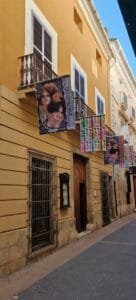
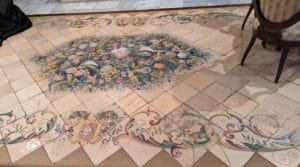
The Ethnological Museum is no ordinary museum. It is housed in a genuine 19th-century bourgeois residence, carefully restored to preserve its original details. Upon crossing its threshold, visitors do not merely observe the past from the outside—they step into it. Its location on the iconic Calle Cavallers reinforces the sense of being in a corner where time has stood still. From the Manises ceramic flooring to everyday and luxury objects, everything here has a story to tell.
- Dénia in the 19th Century: The Golden Era of Raisins and the Bourgeoisie
- What to See at the Ethnological Museum of Dénia:
- Visiting the Ethnological Museum of Dénia: Opening Hours, Admission, and Guided Tours
- Beyond the Museum: What to See Nearby
- Why You Should Include the Ethnological Museum in Your Visit to Dénia
- Keep Exploring Dénia: More Content on Our Blog
Dénia in the 19th Century: The Golden Era of Raisins and the Bourgeoisie
During the 19th century, Dénia underwent an unprecedented transformation. The raisin trade sparked an economic boom that set the city’s rhythm. It was not just an agricultural activity; it was the engine of a true urban, social, and technological revolution. The prosperity from cultivating and exporting raisins brought the train and gas lighting to the city, placed Dénia on the international trade map, and gave rise to a new social class: the bourgeoisie.
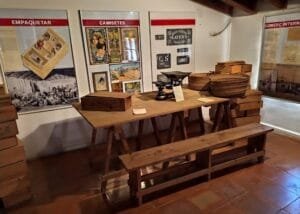
The museum conveys this golden age with remarkable clarity. Its museographic narrative revolves around the raisin cycle, from vineyard cultivation to export to destinations as far afield as England, Northern Europe, and America. In this context, it is no surprise that the bourgeoisie invested in elegant, spacious buildings like the house that now hosts the museum. Walking through its rooms is like reliving the era when Dénia was a growing, prosperous city, connected to the wider world.
What to See at the Ethnological Museum of Dénia:


A Museum Within a Bourgeois House
The uniqueness of the Ethnological Museum of Dénia lies in the fact that the building itself is part of the exhibition. It is not a modern installation or a neutral gallery; it is a late 19th-century bourgeois house, preserved and adapted to serve as a portal to that historical period. The house is located on Calle Cavallers, a prestigious street where the city’s most influential families once lived.
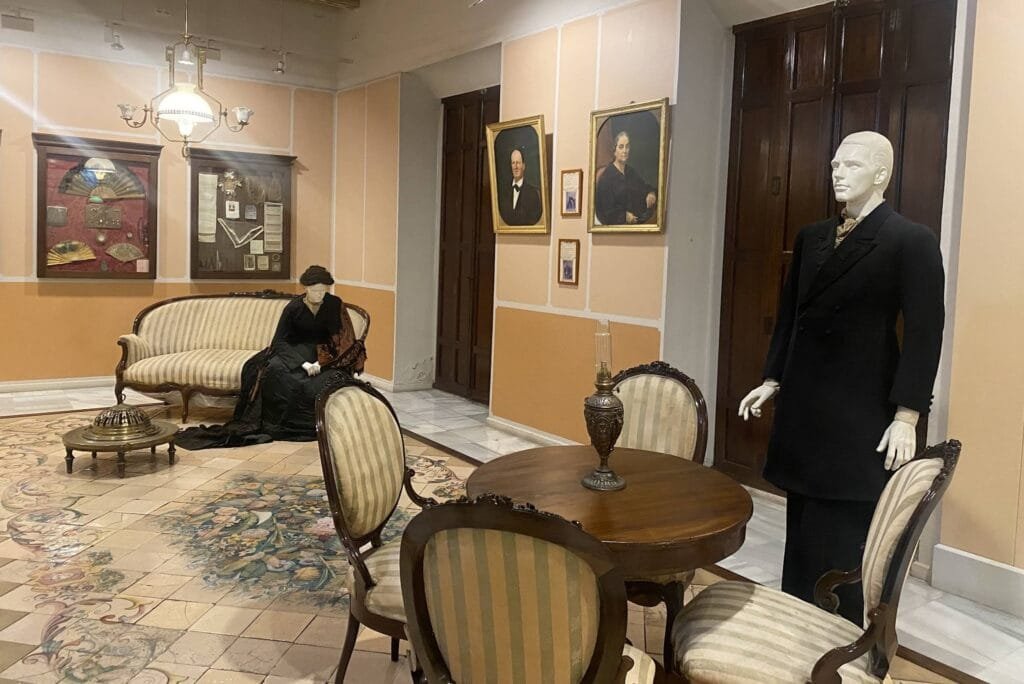
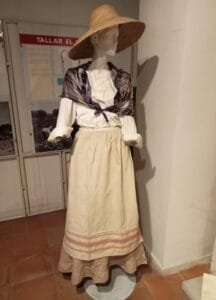
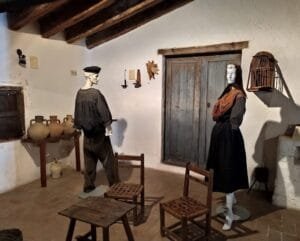
As you explore the museum, you do not simply look at display cases. You walk through real rooms that show how the local bourgeoisie lived. From the furniture to the ceramic floors, from wardrobes filled with elegant clothing to lamps and period decorations, everything is arranged to provide an immersive experience.
A Floor-by-Floor Tour
The museum tour is organised across three floors, each with a thematic focus that enhances the visitor’s understanding. It is a well-thought-out, educational, and engaging structure for both history enthusiasts and curious tourists.
Ground Floor: The Raisin Cycle
This is where the story begins. Old photographs, agricultural tools, graphic representations, and clear explanations introduce visitors to the raisin-making process. From harvesting, drying, and storage to maritime export, this section successfully conveys the economic significance of this product for the city.
First Floor: The Life of the Bourgeoisie
The most intimate and visually striking floor. It is the heart of the museum in terms of atmosphere. Here are the noble rooms of the house, featuring the original Manises ceramic floor painted by Francisco Dassi. Visitors can admire formal attire, period jewellery, and decorative details that reflect the refinement and sophistication of Dénia’s bourgeoisie.
Second Floor: Work and Maritime Trade
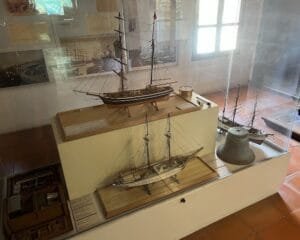
The top floor focuses on the more technical aspects of trade and industry. It features work instruments, wine presses, and period advertisements that illustrate the international dimension of the raisin trade. This section connects local history with the wider world, emphasising Dénia’s cosmopolitan character during the 19th century.
Visiting the Ethnological Museum of Dénia: Opening Hours, Admission, and Guided Tours
One of the museum’s main attractions is that admission is free. This makes it an excellent option for all kinds of visitors, from families to solo travellers interested in history.
Address: Calle Cavallers, 1 – Dénia, Alicante.
General Opening Hours: 9:00 a.m. to 3:00 p.m. daily.
Closed: 1 January, 19 March, 1 May, 25 December.
Special Hours (10:00 a.m. to 2:00 p.m.): 5, 24 and 31 December.
Free guided tours are also organised, requiring prior registration by calling 96 642 02 60 (10:00 a.m. to 1:00 p.m.). These tours often include themed routes, turning the museum into the starting point for a broader cultural experience. Previous tours have included itineraries such as “The Devotional Ceramic Panels of Dénia” or “Raisin Shirts: Between the Exotic and the Dreamlike.”
Beyond the Museum: What to See Nearby
Visiting the museum can be the start of an extraordinary cultural itinerary through Dénia’s historic centre. Being located on one of the streets with the richest heritage, access to other points of interest is immediate.
- Archaeological Museum of Dénia: Also on Calle Cavallers, in the Marquesa’s house, a museum to understand the origins of the city.
- Plaza de la Constitución: Home to the Town Hall and the Church of the Assumption, with its iconic blue dome.
- Les Roques Neighbourhood: Away from the tourist bustle, this area is a maze of “narrow streets” preserving Dénia’s “traditional architecture”.
- Calle Marqués de Campo: Dénia’s main pedestrian street, perfect for shopping and leisure.
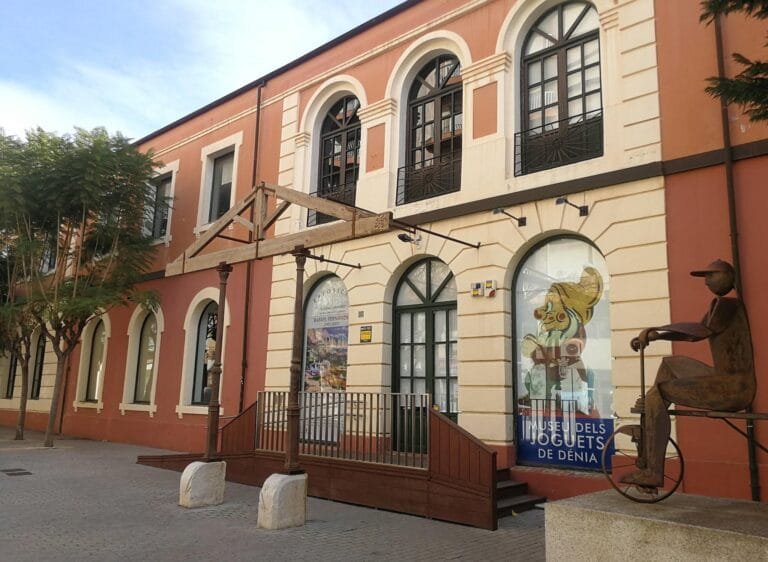
- Toy Museum: Housed in the former Dénia-Carcaixent train station, it brings the city’s industrial toy-making history to life.
Why You Should Include the Ethnological Museum in Your Visit to Dénia
Because visiting Dénia is not just about sunbathing or enjoying the excellent cuisine — it is also about connecting with a surprising history, tangible and told from the heart of its streets. The Ethnological Museum offers a way to view the present through the lens of the past. It helps you understand how an agricultural activity like raisin production can completely transform a city.
And the best part is that you don’t need to be a history expert to enjoy it. The museum’s approach is approachable, accessible, and moving. Visitors leave with the feeling of having learned something, of having connected with something authentic.
Keep Exploring Dénia: More Content on Our Blog
Did you enjoy this guide? Then don’t miss everything we have prepared on our blog at PlayasDenia.es: cultural routes, charming beaches, gastronomic experiences, local secrets, and much more.
📲 Share this article on your social networks if you think it might inspire someone else to discover the true heart of Dénia. Help us spread its heritage and make tourism a more mindful and enriching experience.
Related Articles:
The best restaurants in Denia in 2026: where to eat very well this year
DNA Gastronomic Festival 2025 in Dénia: 10 Years of Creativity by the Mediterranean
The Sea Museum in Dénia: A Must-See Spot in the City’s Harbour
Discovering the Archaeological Museum of Dénia: Living History of the Mediterranean
Toy Museum in Dénia: History, nostalgia and family fun