
Dénia is much more than beaches, Mediterranean cuisine and its impressive castle. It’s a city with soul, full of corners that reveal charming stories and cultural legacies that few visitors expect to find. One of those surprising and truly captivating places is, without a doubt, Dénia’s Toy Museum.
Located in a historic building —the former Dénia–Carcaixent railway station— this free museum offers something you won’t find in any souvenir shop: a direct journey into the heart of childhood. Whether you visit with children, with your parents, or simply out of curiosity, stepping inside is like opening a window into the city’s past and into the story of hundreds of families who grew up with toys made right here in Dénia.
- A story with soul: the toy industry that transformed Dénia
- A journey into the past: what to see inside the Toy Museum
- The charm of wooden and tin toys
- More than toys: social context, workshops and artisanal creativity
- Practical information to plan your visit
- Is it worth it? Real opinions and experiences
- Activities, events and cultural plans with children in Dénia
- Did you enjoy it? Discover more corners of Dénia and share your experience
A story with soul: the toy industry that transformed Dénia
Few people know that Dénia was once a national benchmark in toy manufacturing. It all began at the start of the 20th century, specifically in 1904, when the raisin crisis forced the city to reinvent itself economically. That was when the German brothers Ferchen founded the Metalúrgica Hispano-Alemana, a factory that would forever change the destiny of Dénia.
“The raisin crisis, which had driven the local economy throughout the 19th century, led to the search for new industries. It was then that the German brothers Ferchen established the first toy factory, the Metalúrgica Hispano-Alemana, initially dedicated to tinplate toys printed with imported German machinery and designs.”
Over time, more companies began to appear, and the city witnessed the rise of a new industrial identity. At its peak, more than forty toy factories were in operation, not counting the family workshops that completed the ecosystem. From tinplate to wood, the toys made in Dénia were distributed all over Spain and became part of the childhood of entire generations.
The museum is, in essence, a tribute to this golden age — a space that not only displays toys but also brings to life the working and emotional history of many families from Dénia.
A journey into the past: what to see inside the Toy Museum

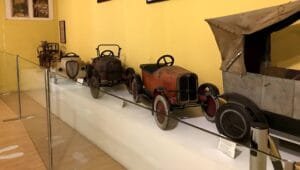
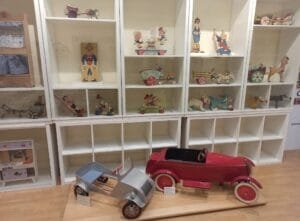

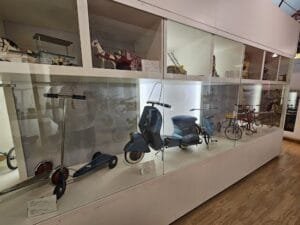
The museum’s exhibition is carefully organised to guide you through a chronological and thematic journey spanning from 1904 to the 1960s. Entering its rooms feels like opening a box of memories: every object tells a story, every toy speaks of its time.
“The Toy Museum, inaugurated in May 1999, offers a fascinating journey through Dénia’s toy production from its beginnings in 1904 to the 1960s. Its collections allow visitors to appreciate the evolution of materials, designs and themes.”
The exhibition is divided into two main rooms:
- A thematic room, which changes according to temporary exhibitions or the relevance of specific factories such as Sauquillo or the Ferchen family themselves.
- A chronological room, tracing the evolution of the toy industry from lithographed tin models to the wooden creations that defined Dénia’s local identity.
Visitors will find authentic gems of toy design: from pedal cars and tricycles to regional dolls crafted from papier-mâché.
The charm of wooden and tin toys



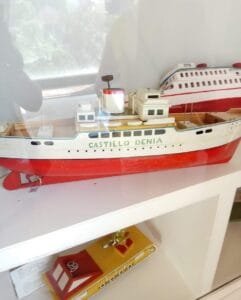
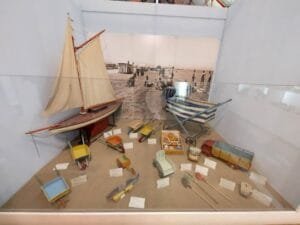


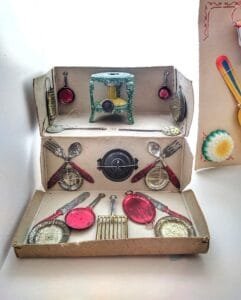

One of the things that most surprises visitors to this museum is the craftsmanship quality of the old toys. They’re nothing like today’s mass-produced plastic products. Here, everything breathes creativity, dedication and skill.
“The golden age of wood: Considered the jewel of the museum, the wooden toy collection is extensive and varied. It includes sailing boats, horse or donkey-drawn carts, lorries, trains, toy kitchens, skittles, hoops and forts with cowboys and Indians. The finishes, colours and ingenuity of these pieces really stand out.”
The lithographed tin toys also hold a special place, not only for their striking aesthetics but because they were the first to come out of Dénia’s factories at the beginning of the 20th century. Those metal cars, miniature bicycles and mechanical toys evoke an era when toys were almost works of art.
Equally important is the section dedicated to dolls and figures, which reveals not only the tastes of the time but also its social and cultural values. In many cases, these toys reflected trades, regions and ways of life that no longer exist today.
More than toys: social context, workshops and artisanal creativity
What makes Dénia’s Toy Museum unique is not just its collection, but its ability to tell the story of an entire society through its toys. Each object is placed in context: the production techniques are explained, the aesthetic changes over the decades, and above all, the lives of the people who made them.
“The exhibition not only displays the toys, but also contextualises them, helping visitors understand how they reflected the society of the time, the means of transport, and even the influence of factories such as Disney. You can see factory posters from that era and a workbench from the Hermanos Ferchen factory.”
One of the museum’s highlights is the original Ferchen workbench. It’s a detail that allows you to picture the craftsmen shaping each piece by hand, sanding the wood, applying colour, and giving life to what was not just a toy, but an extension of popular art.
For lovers of design, nostalgia or industrial history, this museum is a true gem. And for the little ones, it offers a window into a more creative kind of play — less technological, but no less magical.
Practical information to plan your visit
Location: The Toy Museum is located at Calle Calderón s/n, within the old Dénia-Carcaixent train station. On the ground floor, you can also visit the “L’Estació” Art Centre, making it easy to combine two cultural visits in a single trip.
Opening hours:
- Every day: 10:00 – 13:00
- Afternoons (1 October – 30 April): 16:00 – 20:00
- Afternoons (1 May – 30 September): 17:00 – 21:00
- Closed: 25 December, 1 January, and some afternoons such as 24 and 31 December
Admission: Completely free. Another reason to include it on any Dénia itinerary.
Is it worth it? Real opinions and experiences
Reviews of the museum are generally very positive, especially among those looking for something different from sun and beach. Nostalgia is a key part of the experience. Many visitors relive their childhood, recognise toys they had as children, or discover how their grandparents played.
It’s a perfect visit for families, where grandparents can share memories with the younger generation, and children can discover how their ancestors had fun.
🟢 Highlights:
- Free admission
- Emotional and cultural content
- Central and accessible location
- Ideal for families
🔴 Areas for improvement:
- Some visitors find it a bit small
- Could offer more contextual or interactive information
Even so, the quality of the content makes up for the brevity. Viewed as part of a broader cultural plan, the experience is highly recommended.
Activities, events and cultural plans with children in Dénia
In addition to the standard visit, the museum often collaborates on cultural activities in the city. One of the highlights is the Antique Toy and Paper Collectibles Fair, organised by the Amics del Joguet de Dénia association.
“Dénia annually hosts an Antique Toy and Paper Collectibles Fair, organised by the Amics del Joguet de Dénia association. If your visit coincides with this event, you’ll have an even more complete experience.”
Sometimes interactive workshops for children are also held, making the visit both educational and fun.
If you’re visiting with children, this museum is the perfect complement to a day at the beach. It’s short, free, central, and packed with cultural value — a winning combination for any family itinerary.
Did you enjoy it? Discover more corners of Dénia and share your experience
Did you find this visit to the Toy Museum interesting? At playasdenia.es we have many more articles on unique spots, family-friendly activities, cultural routes, and secrets known only to those who have truly experienced Dénia.
👉 Keep exploring our blog to discover more historic places, real experiences, and ideas to enjoy Dénia as it deserves.
And if you enjoyed this article, share it on your social media. Help more people discover this museum full of stories.
Related articles:
The best restaurants in Denia in 2026: where to eat very well this year
DNA Gastronomic Festival 2025 in Dénia: 10 Years of Creativity by the Mediterranean
The Sea Museum in Dénia: A Must-See Spot in the City’s Harbour
The Ethnological Museum of Dénia: A Cultural Treasure Worth Discovering
Discovering the Archaeological Museum of Dénia: Living History of the Mediterranean